Protect the Monarch Butterfly
Help save the monarch butterfly!
Why are our "fluttering friends" so important:
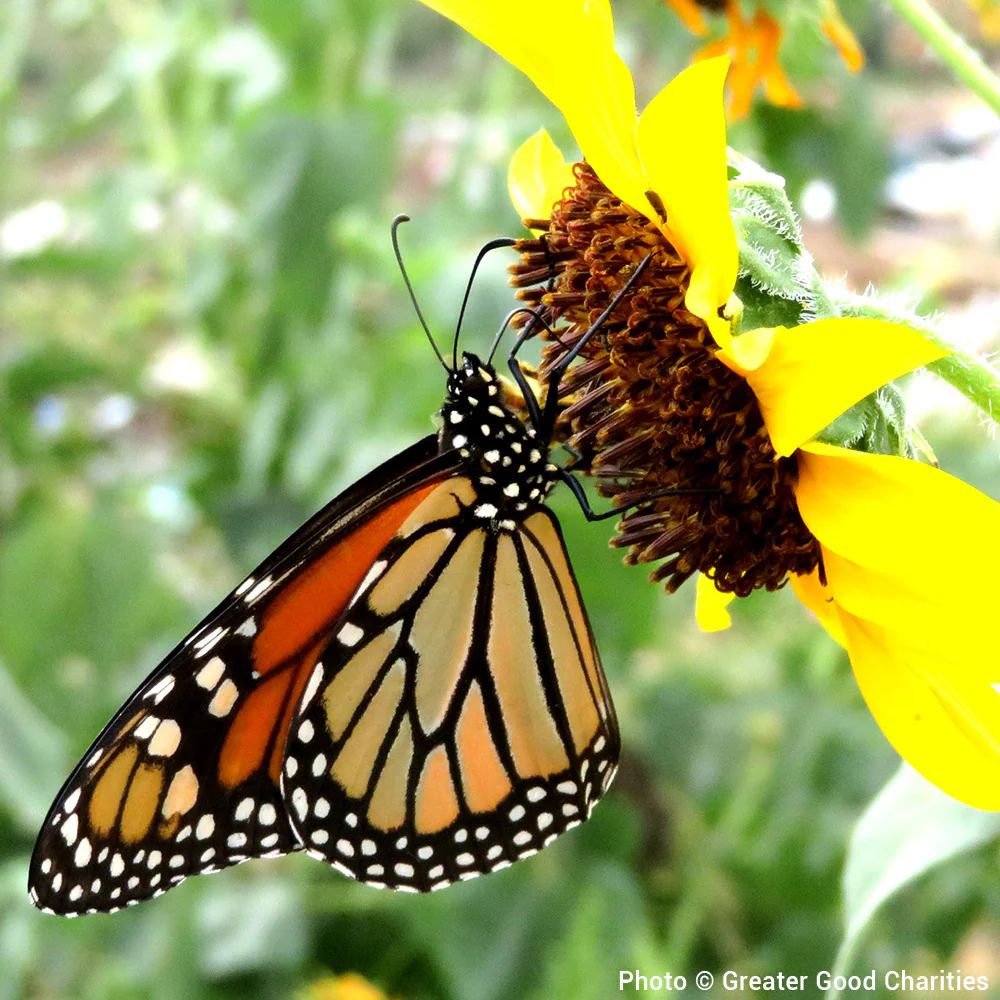
Monarch butterflies are not only beautiful, but they are also key pollinators in our ecosystems. By helping pollinate, monarchs support plants in bearing fruit and are a vital part of the food chain for people and animals alike. Monarchs are also considered an indicator species, meaning they are very sensitive to climate changes and the presence of chemicals in the environment. It's a wonderful sign when butterflies are thriving.
![[alt text here]](https://cdn.shopify.com/s/files/1/1421/8248/files/Butterfly__0003_AdobeStock_283031165_480x480.jpg?v=1624888610)
![[alt text here]](https://cdn.shopify.com/s/files/1/1421/8248/files/Butterfly__0004_AdobeStock_237235177_480x480.jpg?v=1624888436)
The danger:
Monarch populations are on the decline due to a number of factors. Deforestation is causing habitat loss, while more extreme weather also poses a threat to this delicate creature. Because they are so sensitive to the climate, severe storms, harsh winters, drought, excessive rain and temperature drops can kill many monarch butterflies.
Monarchs are also losing access to milkweed; a plant they depend on. Many people believe milkweed is a true weed and remove it from their lawns and gardens, when in actuality it is a plant that sustains butterflies. Like the monarch butterfly, milkweed faces its own share of threats: herbicides, drought, and urbanization to name a few.
Due to these factors, there are concerns that the population of this species is declining at a fast rate and that may be on the endangered species list soon.
Why milkweed:
It's the monarch's favorite flower! While monarchs pollinate many different types of flowers, the milkweed flower is their favorite. They rely on the nectar from the plant to drink, and milkweed is also one of the few places where these butterflies will lay their eggs.

How to help:
You can help save monarch butterflies by helping plant milkweed and other native wildflowers. Monarchs depend on the milkweed flower for not only nectar but to lay eggs and grow their population. When you choose to help, we will work with regional experts to plant hundreds of pounds of milkweed native seeds, both annual and perennial, in areas that will assist in the survival of the species. Your support also helps fund labor, supplies and tools to ensure the seeds are being planted properly. As a bonus, these flowers will help other natural wildlife like birds, bees and other types of butterflies!
You can join the effort to protect monarch butterflies and support pollinators this spring. Donate today to help restore their habitats and ensure their survival!
Greater Good Charities has ultimate authority and discretion with regard to the distribution of its funds. All expenditures made are consistent with the exempt purposes of Greater Good Charities.
Upcoming Projects
South Puget Sound, WA - June 2026

Less than 3% of South Puget Sound’s native prairie remains; of that, only 1% is in good ecological condition. Greater Good Charities is working to make sure that 3% becomes the foundation for what comes next.
Vital pollinators like Monarchs and one of North America's most endangered butterflies- The Taylor's Checkerspot - depend on this habitat.
85% of flowering plants require pollinators to reproduce. Pollinator health and prairie restoration are inseparable.
With your support, GGC will fund the project for native seed propagation, prairie restoration, invasive removal, and habitat enhancement.
Original: $1.00
-70%$1.00
$0.30Product Information
Product Information
Shipping & Returns
Shipping & Returns
Description
Help save the monarch butterfly!
Why are our "fluttering friends" so important:
Monarch butterflies are not only beautiful, but they are also key pollinators in our ecosystems. By helping pollinate, monarchs support plants in bearing fruit and are a vital part of the food chain for people and animals alike. Monarchs are also considered an indicator species, meaning they are very sensitive to climate changes and the presence of chemicals in the environment. It's a wonderful sign when butterflies are thriving.
The danger:
Monarch populations are on the decline due to a number of factors. Deforestation is causing habitat loss, while more extreme weather also poses a threat to this delicate creature. Because they are so sensitive to the climate, severe storms, harsh winters, drought, excessive rain and temperature drops can kill many monarch butterflies.
Monarchs are also losing access to milkweed; a plant they depend on. Many people believe milkweed is a true weed and remove it from their lawns and gardens, when in actuality it is a plant that sustains butterflies. Like the monarch butterfly, milkweed faces its own share of threats: herbicides, drought, and urbanization to name a few.
Due to these factors, there are concerns that the population of this species is declining at a fast rate and that may be on the endangered species list soon.
Why milkweed:
It's the monarch's favorite flower! While monarchs pollinate many different types of flowers, the milkweed flower is their favorite. They rely on the nectar from the plant to drink, and milkweed is also one of the few places where these butterflies will lay their eggs.
How to help:
You can help save monarch butterflies by helping plant milkweed and other native wildflowers. Monarchs depend on the milkweed flower for not only nectar but to lay eggs and grow their population. When you choose to help, we will work with regional experts to plant hundreds of pounds of milkweed native seeds, both annual and perennial, in areas that will assist in the survival of the species. Your support also helps fund labor, supplies and tools to ensure the seeds are being planted properly. As a bonus, these flowers will help other natural wildlife like birds, bees and other types of butterflies!
You can join the effort to protect monarch butterflies and support pollinators this spring. Donate today to help restore their habitats and ensure their survival!
Greater Good Charities has ultimate authority and discretion with regard to the distribution of its funds. All expenditures made are consistent with the exempt purposes of Greater Good Charities.
Upcoming Projects
South Puget Sound, WA - June 2026
Less than 3% of South Puget Sound’s native prairie remains; of that, only 1% is in good ecological condition. Greater Good Charities is working to make sure that 3% becomes the foundation for what comes next.
Vital pollinators like Monarchs and one of North America's most endangered butterflies- The Taylor's Checkerspot - depend on this habitat.
85% of flowering plants require pollinators to reproduce. Pollinator health and prairie restoration are inseparable.
With your support, GGC will fund the project for native seed propagation, prairie restoration, invasive removal, and habitat enhancement.